CHAPTER I
Press F1 to Continue
The ground is alive. It hums and writhes, coils and throbs like a living thing: a fire-beast of some kind hiding beneath the angry black bitumen of the asphalt. Holy men have done it for ages. A walk of fire, a ritual to test endurance and faith—bare nerve against fire, spirit above pain. But there are no temples here, no sages. Just a fourteen-year-old making his way home from school. Nothing sacred, nothing holy, nothing epic.
I look ahead. Thirty minutes of asphalt, sky, and sun separating me from home. As if I were a soldier trudging through blasted fields and burning villages just to see the door of my house again. The road bites like shrapnel, the sky presses down like heavy artillery, yet still—everyone must make it home.
With each step, the asphalt sears through the thin, bonded leather of my school shoes. My ratty, maroon-colored Gownhouse bag, heavy with books I barely understand, hangs off my shoulder. Its strap cuts deep into my skin. Drum-a-drumm… drum-drumm, like a Philly Joe lick. Something rattles: a crusty, half-eaten sandwich, sticky with the day’s heat, bouncing inside the lunch-box like a goddamn trapped animal.
The collar of my shirt, which that morning gleamed with crisp, starch-white grandeur, now cowers and slumps, carrying the scars of a day spent in effort and tedium. Stains gather at the edges—a mix of sweat, chalk, ink (Salman Tariq strikes again!), a smear of old ketchup, and the invisible grime of life pressing down. It is no longer just a shirt. It is a map of my fatigue, my endurance, the small, relentless suffering I wear openly for anyone willing to see.
Half a mile. Still. My legs know it.
I take a deep breath. My mind is still stuck somewhere between 8th grade math: sine and cosine, mean and median… between odd and even, positive and negative—yet somehow summing to nothing at all. Then my mind wanders back to recess. My frog-in-a-blender left arm took quite a wallop today. I bowled too short, too wide—and Sohail Anjum ate them up like cinnamon rolls. Bastard.
My ink-stained necktie flaps in the hot, blazing wind, like a flag of surrender. One mile of asphalt, a trudge worthy of warriors. At last—the war is over. Home.
“How was your day?” Ma asks.
“Fine,” I say, with the enthusiasm of a CDA registry clerk.
“Did you do well on the maths test?”
“Yeah,” I reply, like a machine stuck on auto. (Lie. I bombed.)
“Now… tsk, tsk… who threw this ink on your shirt?”
“I dunno.”
“There’s kuddu-daal in the fridge,” she says. “Roti’s in the changair.”
I groan.
“Kuddu-daal again? Even prisons change the menu once in a while.”
I stare at the fridge like it had personally betrayed me.
Despite being hungry enough to eat whatever crawls under the table mats, I pass on lunch, or whatever that strange sloppy mess of green is in the fridge. I figure I can survive till dinner… maybe scavenge a few crumbs, dig out a couple of stale Choco Chums from the folds of the sofa. With that grim plan of subsistence in mind, I drag myself straight to my room.
I toss the ugly little thing—my schoolbag—under the bed, its rightful place. Away from light, away from sight. From the walls, Wasim Akram’s eyes, Winona Ryder’s eyes, Skeletor’s eyes (wait..does he have eyes?) track my every move, silent witnesses to my small, clumsy life.
From the cassette rack, I dig out Yield. I fling my sister’s Gupt tape across the room—eww—and slide Pearl Jam in. Click, clack, whirr—the National wakes up.
The first riff rolls out like a kitchen appliance gone blitzo—electric, brutal, alive. Over it, Eddie—half-man, half-beast—grunts, wails, chest-thumps vowels and half-syllables into the mic. It isn’t music. It’s survival of the fittest—man versus nature, and the room pulses like a jungle: loud, messy, mine. The perfect soundtrack to my afternoon.
Off goes the uniform—pants and shirt sprawled on the floor like chalk outlines at a violent crime scene. On go baggy blue jeans and a raggedy yellow-and-black check shirt—the kind Ma swears would make a better floor mop than anything else.
“Who’s got the brain of JFK?” Eddie bellows.
A quick splash of water. Hair stuck to my forehead. Cold Tang, in my favorite mug. I collapse into the chair with my bestest friend.
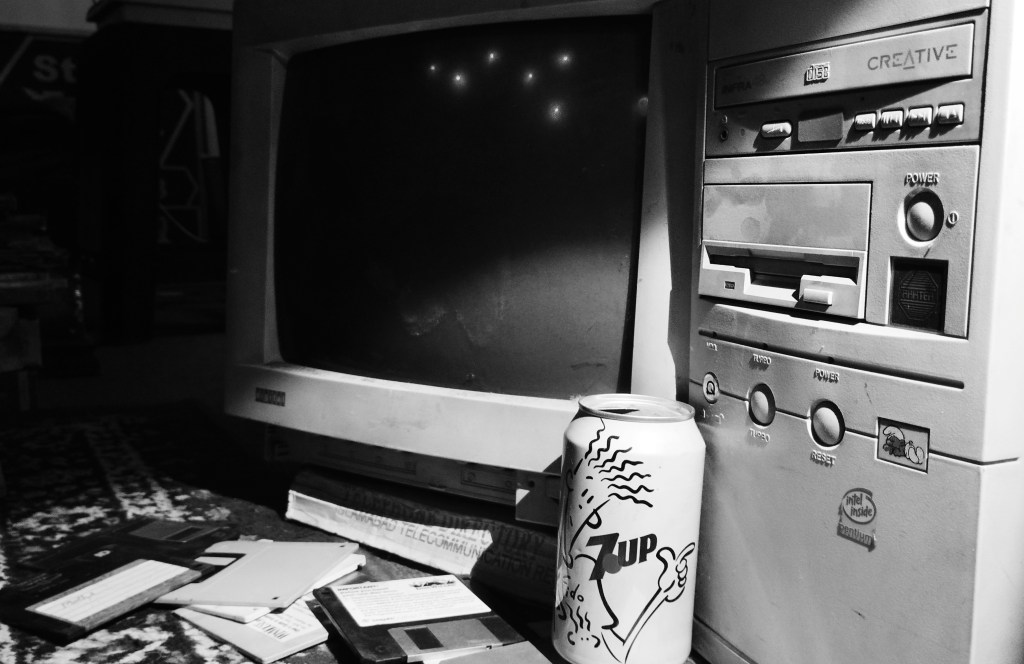
The Pentium I.
In all its glory.
It sits there on the table, quiet, as if in deep sleep—its beige, fat, square body at rest. A monolith of the future that has already passed. Burned into its plastic hide is a small octagon. Like a coin half-buried in the sand, the “Akhter Computers” logo shines, glimmers in the afternoon light. The logo looks remarkably similar to the OCP logo from Robocop—both carved from the same blocky, metallic military futurism of the ’80s. And no surprise there. As far as I can tell, both corporations are inherently evil. Both build malfunctioning, poorly designed machines destined, sooner or later, to bring about a man’s ruin.
“All the static in my Attica, shoots down my sliding door…” the tape hisses.
Two buttons glare from the side of its ecru body—serious buttons, the kind that don’t belong in a boy’s bedroom but in a top-secret missile bunker somewhere beneath the Pentagon. A tiny mysterious keyhole even sits nearby, as if you needed clearance from Mission Control just to turn the damn thing on. I lean forward in my chair, and with the precision of a pro billiard player trying for a maximum break, I push the round power button.
A dull click, a pause, the beige, fat machine shakes from its Vipassana-like trance.
The lights on its front belly blink red, then green, then red again—traffic lights gone berserk. The tinny speakers crackle with cosmic microwave static, as if anticipating contact with little green men. The hard drive whirs up like a rusty turbine, and somewhere deep inside, metal teeth chatter against plastic.
“A wave came crashing like a fist to the jaw..”
Pixel by pixel, the Windows 95 logo crawls into place.
A few notes ring out in shards. Eno’s startup sound. Sharp, bright, exact—and gone before I could even notice.
The world boots.
And I am in.
The desktop pulses with life.
Outside, I hear DUG. DUG. THAKK. Probably, Ma in the kitchen, trying to get the grinder working. Again—DUG. DUG. WHACK!?! Louder now, mirroring my heartbeat—quick and shallow, pulsing with panic and urgency. Slowly, I drag the sleepy pointer to a familiar square on the desktop. A tiny Chip’s Challenge icon. It winks at me. Daring me. “Kiddo,” it whispers, “your life already sucks. Let’s suck it up a notch further.”
I know the mortal dangers. I double-click anyway.
WHIRRRRRRRRRR!
The grinder roars to life.
I am no longer myself.
I am no longer in a house of brick and mortar, nor inhaling the familiar—yet foul—funk of kudu daal.
I am the boy. Somewhere else entirely.
“It’s evolution, babyyyy! Whoaaa, *grunt*… waaaaaaaah… yeahhhh” Eddie goes ape-shit.
CHAPTER II
Chip’s Challenge: Welcome to Hell
CHIP’S CHALLENGE was every bored kid’s Everest in the 90s—a cruel, sadistic maze of pixels, clearly designed by someone who hated children.
Yet somehow, it became part of me—my DNA, my moral fiber… though, frankly, my moral fiber’s more like a moth-eaten sweater.
My favorite games were… different. No doubt about that. There was Prince of Persia, battling skeletons, downing suicide potions, and staring so hard into a mirror he split in two. Existential crisis, anyone? There was the Doom guy: raising an eyebrow, raising hell, and driving a chainsaw into some little hellspawn—like it owed him monies. And then there was StarCraft, casually annihilating colonies as easy as Robert Clive annexing Bengal over tea & biscuits.
By midweek, the thrill of these usual favorites started to wear thin—much like the glue holding all my life together.
But with just enough time between Qari saab, and SWAT Kats at 4 p.m., along came Chip’s Challenge. There were no dragons here. No death rays. No collapsing universes. Just logic. Cold, cruel, delicious rationale… like logic had grown fangs and an appetite for suffering.
Every choice branched into infinity,
Every corridor a question without a mark,
Every dead end an answer I didn’t know I was asking.
It was the Library of Babel, but in 16-bit.
Welcome to hell.
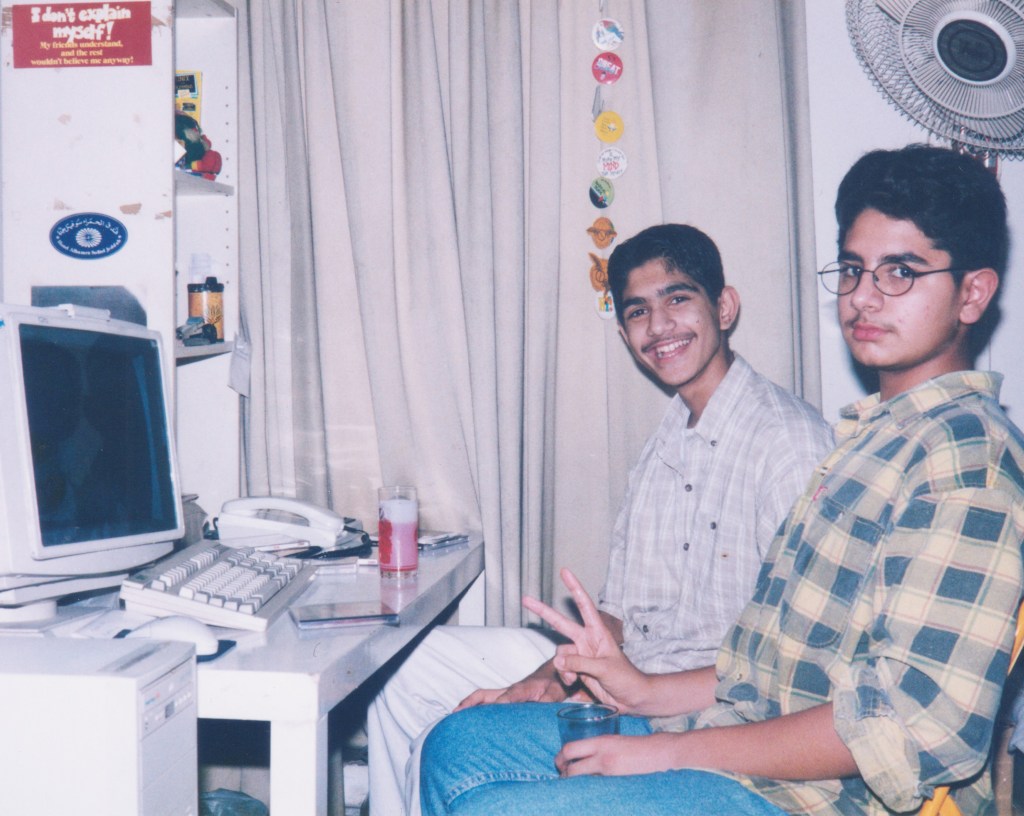
In the slow-burning days of the 90s, it was the ritual of my friend Omar and me—partner in crime, fellow outlaw of the suburban wasteland. Rain drowned yet another cricket match in Sri Lanka (Great soggy wickets! Who in their right mind schedules a test series during monsoon season?!). Afternoon television offered nothing but Ainak Wala Jinn reruns or a flustered Auntie wrestling custard on a cooking show. That’s when we knew. Time to migrate to the greenish, medicinal glow of a CRT monitor. Sometimes his place, sometimes mine—it didn’t matter. The altar was the same: humming, buzzing, flickering, faintly carcinogenic.
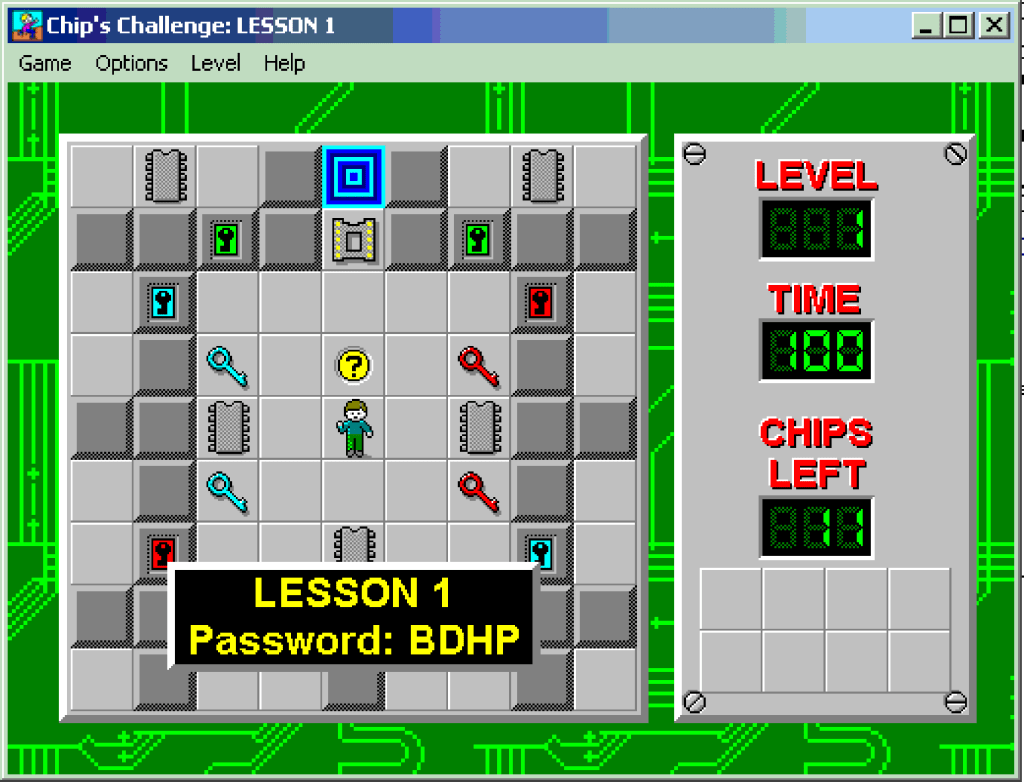
In the middle of it all stood a boy named Chip. Motionless. Dressed in an electric cyan jumper and burn-your-retinas green bottoms—colors unknown to nature. His complexion pale, ghost-white. Blanched. Shitless. Just like we were.
LEVEL 9: Nuts And Bolts. Wait… what? How do we even—ugh.
The graphics were elementary. Offensive, even. Like done by a toddler with a box of crayons, high on Benadryl. Chip didn’t even bother moving his arms or legs—he slid like a rogue soap bar across the bathroom floor. Slippery. Uncooperative. Very unreasonable. There were no jumps. No flourishes. Just cold, exact movement at the command of our fingers. Maybe deliberate, or maybe Chip was born of lazy code—a bastard child of a game designer or a medieval torturer on a lunch break.
The premise was simple. The journey was hell. We guided Chip through 149 levels of absurd, cruel, beautiful agony—ice, water, fire, teleporters, invisible walls. Collecting chips. Computer chips. Not potato. This is hell, damnit, not a school trip to the zoo?! Dodge the elements, unlock the socket, and escape to the next level—where odds are, you’ll be rubbed raw like cheap underwear on a sweltering day.
LEVEL 53: Traffic Cop. Sheesh. Haha. Close call. Do I have to do everything myself, Omar?
There was no real combat here — no fatalities, no Hadoukens. No. Just the frustration of figuring shit out. Like playing a careful game of chess with a reputable opponent. The Soviet kind. Smoking through the silence, eyes heavy with winter, staring at you like you’d already lost. Omar and I swapped theories, like scientists arguing over dark matter’s secrets. All the while being chased, and taunted by rudimentary AI with green skin and teeth requiring immediate medical attention.
It was an experience that rewarded thoughtfulness over force. As if it were Buddhist in nature and spirit—every mistake a lesson, every restart a new theory tested, every level cleared a trophy.
LEVEL 133: Blobdance. Damn you, Chip. Damn you to hell. Someone get me a soda now. Grape. And a defibrillator, stat!
The punishment was only exacerbated by the game’s music. Two MIDI tracks set the tone. One, an upbeat, circus-like anthem, practically throwing pies in your face, laughing at every ridiculous death—slipping on ice, roasted by fire, crushed by your own bad timing.
The other, a frantic, manic dirge—with a mad jazz bassline—the kind that melts your face. Imagine a polyphonic Charles Mingus hunched over a double-bass, a cigar stuck in the corner of his mouth, in a smoke-choked jazz club where shadows curl to saxophone moans. Each phrase is a soul-bomb—growling double-stops, fast, fierce, shaking the bones of every beatnik in the room.
This was no ordinary music. It was a soundtrack to perseverance.
And Chip’s Challenge wasn’t just a game.
It was defiance.
It was liberation.
It was a punishment for a past life of sin.
Omar’s living-room had become a crucible. The fan hummed above like a tired wasp. Shirts clung to our backs like wet parchment, sticking, suffocating. Dust motes floated like microscopic ghosts in the streaks of fading sunlight slicing through the blinds, unnoticed. Our eyes were red, rims raw with concentration and fatigue, staring so hard it felt as if we’d seen the end of all things and now trembled at the futility.
LEVEL 149: Special. This is it, Adeel, said Omar. The final level. The summit. The damn Everest of this goddamn hell. Omar suggests a plan. I just piss my pants.
We leaned close, shoulders brushing, breathing shallow, synchronizing our strategy. We took turns guiding—sliding, really—Chip through pixelated peril, our heads bobbing in sync with Mingus’ bassline. Fingers hovered, trembling slightly; each keypress deliberate, surgical. Every movement was a dance of steel and nerves. Omar whispered timing, spatial angles, contingencies—our voices small, insignificant against the impossible task before us. The air reeked of exhaustion, sticky grape, and overheated CRT plastic.
Chip moved. Precise. Cold. Unforgiving. The abyss lurked below, dark as a maw, waiting. Each jump, each slide, a calculated risk. Our plan was flawless… as flawless as madness allows.
The sun tilted just right. Gravity softened. The keyboard clicked with purpose. Time slowed. Space bent. Omar’s fingers moved like gods in motion.
Omar had locked-in for the kill.
Heart in my throat.
The air throbbed.
Every pixel screamed.
Then. It happened.
My hand. A clumsy reach for the map. A momentary lapse. I brushed the wrong key. And Chip fell.
Just fell.
Into nothingness.
Life paused. The monitor hissed. The ceiling fan hummed a funeral march. I sat frozen, chest tight, heart thudding like a subway train barreling through a tunnel.
In a matter of few seconds, a few microseconds, it all fell apart. A thousand careful steps, strategies, a perfect alignment—all gone. Laid to waste like a ripe fruit left on the kitchen counter too long. Flies hovering like vultures over a carcass.
I sat there like a doofus. Paralyzed. Unable to move. Unable to speak.
I should’ve said sorry. Didn’t.
Omar didn’t speak. Didn’t have to.
He just stood up, quiet as a knife sliding back into its sheath, and left.
BUMMER.
CHAPTER III
CHKDSK
It’s been thirty years since.
And a lot can happen in thirty years. Thirty years of mornings you didn’t notice, of evenings that slipped through your fingers like loose change. Some people made it. Some didn’t. Some are still around. Some are gone forever. Hair thins. Bellies grow. Faces change. Faces disappear. Thirty years of watching the world change while you try to remember who you were, who you wanted to be, and who you’ve somehow become.
I may not remember all of it. Memory is cruel that way.
I guess, some things stick. Others… don’t.
The taste of Double-Cola has slipped from my memory.
The face of the canteen-wala uncle is lost to me.
I remember Mushtaq to Symcox. The ball going through the stumps without disturbing them. The game—forgotten.
Even if my life depended on it, I can’t work out the perimeter of this room. (All that eighth-grade math—what a scam)
No clue why my classmates called Ammar “Leg-Piece,” but damn if it doesn’t still crack me up.
I can’t quite recall—or truly understood—what my father usually talked about over dinner. Baudelaire? Faiz? Some private war over meaning and existence. I wish I had.
But I remember the feeling.
The soft hum of the processor, the gentle clicks of the mouse.
My brother’s Martina Hingis calendar on the wall, flapping gently with each lazy spin of the fan.
And I remember the smells. The faint ozone of overheated electronic components. A hint of oxidized ferric magic wafting from 5.25-inch floppies. And underneath it, the funk Qari saab left in the room, stubborn and alive, sticking around all weekend, like that distant cousin from your mother’s side nobody likes.
And I remember Chip’s Challenge.
My betrayal of Omar.
And his face.
A face not one of anger, no. Something meaner.
Treason. Sabotage.
A wound that scabs but never heals.
He still carries it, like a grudge carved in bone.
Like some shitty gum on the bottom of your boot—you swear you scraped it off, but it’s still there.
Because spite isn’t new—hell, it’s the engine of history. We’ve guillotined queens for showing more backbone than the kings. Exiled poets for scribbling smutty words like freedom and truth in their filthy little books. Burnt astronomers for having the temerity to look at the stars when we were too afraid to do so ourselves. Socrates? Poisoned for asking one too many questions. Hypatia? Butchered because they couldn’t stomach the truth. Zulfikar Ali Bhutto? Hung—because suggesting an Islamic-flavored socialism was just too avant-garde for 1979.
And yet… against the tide of blood and bitterness, there also exists a stubborn, ridiculous, impossibly human thing: forgiveness. The small flame that refuses to be snuffed out, even under the blow of a hurricane. It’s soft, messy, tender, and absurdly brave—like having the gall to laugh at a clown who just hotwired your Volkswagen and drove off with twelve of his buddies.
Omar, in his infinite, exasperated wisdom, showed that side of humanity. He let it slide—not because I deserved it, not because the universe demanded it, but because deep down, even in his savage soul, the human spark of mercy refused to die. Like a tiny cockroach of human conscience. Skittering. Scuttling. Indestructible. And hell, if we can all forgive Dylan for the ’80s, my tiny mutiny seems almost trivial in comparison.
We’re both men now, in our forties—bodies more fragile, hair grayer, patience worn thin. Our hearts carry the quiet sorrow of things we should have done differently. Yet—despite fate’s cruel hand, or maybe just my clumsy one that day—miraculously, our friendship survived. Like a stubborn little spore when the dinosaurs burned to cinders. And though Omar still brings up the Chip’s Challenge episode now and then—like an old war story, waving it around just to watch me squirm. Torture, sure. But maybe that’s just a small price you pay for stabbing a friend in the back.
And yet together, we’ve carried on. We swam through the shit, bled on jagged edges, and stole laughter wherever we could—between bad decisions, missed exams, the Bangalore ‘96 Quarter Final, and a thousand bottles of cheap hair gel. Truly, the horrors of growing up. Shoulder to shoulder, joke to joke, we stumbled through it all—two outlaws of our own suburban wasteland, stubbornly alive, stubbornly laughing, stubbornly unshaken.
We still sit down at MashAllah Snack Bar, devouring samosa burgers like it’s a sport, sauce dripping from our beards, making a mess only professionals could pull off with pride. We still shake our heads at Mohd. Hussain, a spinner who could turn the ball like a magician but never his luck. We reminisce about Lana Lang. Bemoan Tony Grieg. We belch out forgotten TV theme songs. We laugh about the day we wrote our “hit song” in the Chemistry lab on the back of a past paper—the one we never recorded, the one that could’ve made us pop stars of the century. Or maybe at best, be a part of fleeting schoolyard gossip. Omar can still make me laugh—with that ridiculous, most disgusting three-toads-in-the-toilet story—the kind no one else should hear, but somehow everyone needs to. Through decades of clumsy hands, small betrayals, and life’s catastrophes, we’re still here—messy, loud, ridiculous, and hanging on, much like those poor sod toads in the toilet.
Life has grown more complex than any Chip’s Challenge level. The keys don’t always open doors, and the maps rarely point you in the right direction. The monsters aren’t pixelated—they’re real, they wear suits and want all of your monies. The timer never pauses, the levels never reset, and the walls sometimes move while you’re not looking. You keep moving, keep guessing, praying the next checkpoint isn’t a trap—but usually is. Yet you still go on.
What other option is there anyway?
“But to dodge the elements, unlock the socket, and escape to the next level—where odds are, you’ll be rubbed raw, like cheap underwear on a sweltering day.” (Did I just quote myself?!)
So, in 1998, when pimples, quadratic equations, Ricky Martin, mushroom clouds, and the small cruelties of growing up filled our timetable,
…there was that bastard Chip—
silent, square, absurd.
Sliding, failing, repeating—teaching us a lesson our parents never could. Without even moving his bloody arms.
Keep sliding, you f*ckers. Keep bleeding. Laugh at the monsters, laugh with them if you can—and let the goddamn chips fall where they may.
**And if you’re lucky, have a forgiving friend by your side—even better if they’ve got a disgusting story about those three-toads-in-the-toilet.
“It’s now safe to turn off your computer.”
*****
Lay that bass line down, Mr. Mingus.
Lay those flat 7s—slow and sweet.
Cuz the kid in the cyan jumper’s still slidin’,
And baby — so are we.
So are we.
 ADEEL BABREE
Leave a comment